
Persecution is often viewed as a hindrance to the growth and
development of the church. Not one of us
desires to be persecuted, but when it does happen, God has faithfully supplied
the grace and courage to face those hard times. It is often in times of persecution that the greatest acts of faith are
seen.It is also true that when
persecution diminishes that Christians often need to work harder to keep, or
recover, the original vision of Christianity. This is particularly seen in the Anabaptist Church in Holland from 1650
onward.
This brought concern as the people realized that the stories
of the martyrs would be lost as the times changed. One Mennonite leader in Holland, Thielman
van Braght, decided to collect those stories. He was convinced that Anabaptism was in danger of disappearing unless
the history would be recorded. Van
Braght began to gather and compile these martyr stories into one volume, and it
eventually became known as the Martyr’s Mirror.
The Martyr’s Mirror was first published in the Dutch
language in 1660. By 1685, the second
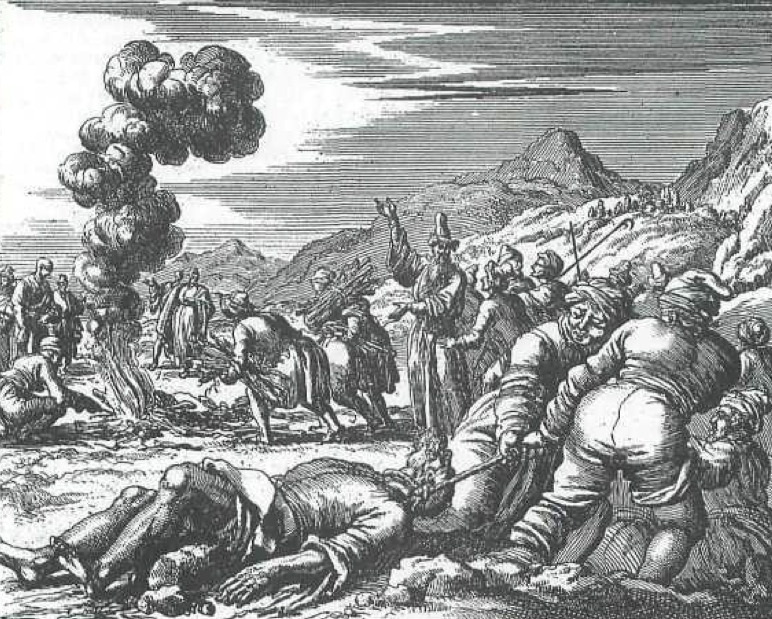
edition included 104 etchings that created a picture of the suffering for the
readers, which mark the work to this day. These martyr stories became the central way in which the vibrant faith
of the early Anabaptists was communicated.
When the Amish and
Mennonite moved to America, the first book they commissioned was the Martyr’s
Mirror. They asked The Ephrata Cloister
to print a German edition, in this case with no etchings. The Cloister printed it in 1748, and these
copies are still in circulation today. If you visit the Amish & Mennonite Heritage Center, you will be able
to view each of the editions mentioned above. They are on display not only because they are important and valuable,
but also because they remind us of the vibrant faith and the price that our
forefathers paid for that faith. They
also remind us of the need to constantly evaluate our lives to see if our faith
could withstand the same tests as our forefathers withstood.
Today
the Martyr’s Mirror can be found in many Amish and Mennonite homes. Also
available are some modern versions of the stories found in the work. While a translated work from the original is
good, to be able to tell the story in our language so that our children and
youth can understand is of vital importance to convey the historical faith and
heritage of our forefathers.